Application Solutions
DC220 for Central Air-Conditioning Energy Saving
Uses temperature differential control to adjust pump speed by VFD so a central air-conditioning system follows load demand and reduces energy consumption.
Technical Note
Details
Application Background
Central air-conditioning systems consume a large share of building electricity. Systems are usually selected for maximum cooling demand and often run pumps at full speed even when the load is lower, creating high-flow, low-temperature-difference operation and wasting energy.
System Principle
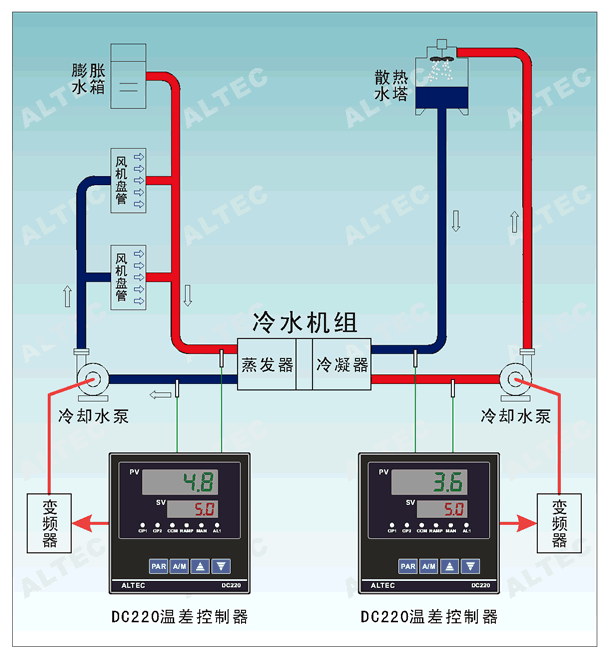
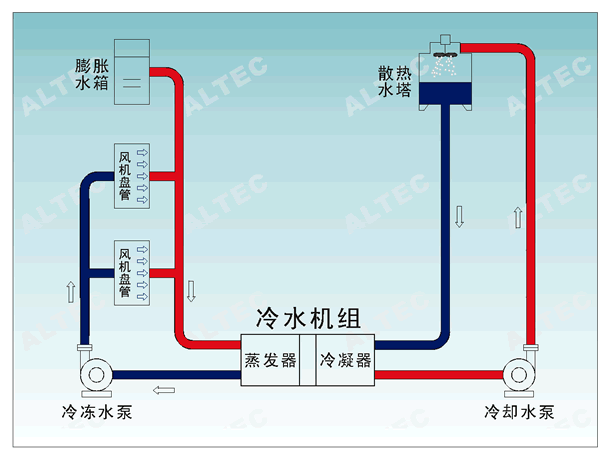
A central air-conditioning system includes a chiller, cooling-water circulation, chilled-water circulation, fan-coil units and a cooling tower. The chiller transfers heat from chilled water to cooling water, and pumps move both circuits through the system.
Retrofit Scheme
By adding DC220 temperature differential controllers and VFDs, the system measures inlet and outlet water temperature difference and adjusts chilled-water and cooling-water pump speed. The goal is to keep system efficiency optimized while meeting comfort requirements. DC220 can use PID control to maintain constant differential temperature or proportional control so pump frequency follows the temperature difference.